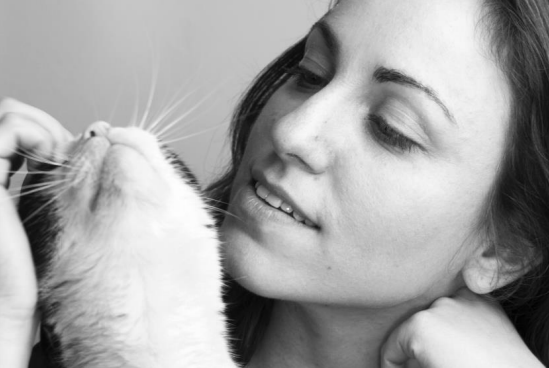
You’ve heard it said before by cat haters and lovers alike: cats are cold, standoffish, selfish, even “furry sociopaths.” While you may not buy that cats are evil, cold-hearted killers, many cat lovers believe that their cats are essentially loners, who appreciate human company only because it comes with the promise of food. But cats, while not as outgoing as dogs, are far more companionable than many people believe. Read on to find out more about how cats socialize, both with other cats and with humans.
Feline societies
True, cats are independent, and don’t have the same innate need for social contact that dogs do. Unlike dogs, cats are solitary hunters, meaning they don’t stalk their prey in groups, so they’re not dependent on others for survival. And their ancestor, the wildcat, does tend to live alone. But think of cats not as antisocial, but as introverts. A human being who prefers a good book to a party still wouldn’t want to spend his life in solitary confinement, and so it is with cats.
A 2003 paper by researchers at the College of Veterinary Medicine at the University of Georgia explains that domestic cats are social creatures who naturally form colonies whenever there’s enough food to go around. These colonies contain a dominance hierarchy and a complex web of relationships. Cat colonies are matrilineal, meaning their society is structured around mother-offspring relationships and cooperation between female cats to defend food sources from competition.
Within a colony, each cat has its own territory — which is why it can sometimes be hard for two cats to get along in very close quarters — but in neutral zones between territories, domestic cats will engage in friendly behaviors such as nose-touching, grooming, cuddling and sleeping together. All of these actions spread around the “colony scent,” marking each other as part of the family. Cats even have their own special friends, or as the researchers put it, “preferred associates.”
While cats are wary to outsiders, they can come to warm up to them after some time and many interactions. And when we adopt cats, they adopt us, treating us as a beloved member of their colony. In fact, scientists now believe that rather than being purposely bred by humans, cats domesticated themselves! Nosing their way into our lives with friendly curiosity, it seems cats have been social from the start. So why can they sometimes seem so aloof?
Foreign relations
According to experts, social contact is an important form of mental stimulation for domestic cats, especially those confined indoors. Cats without enough contact may become bored and neurotic, leading to unwanted destructive behaviors.
But cats socialize and express themselves differently from either dogs or humans, and understanding those differences is crucial to forming a good relationship with your cat. For instance, while dogs and humans can mutually enjoy prolonged eye contact, cats (like most other animals) tend to perceive eye contact as threatening behavior, unless it’s with someone with whom they share a close bond. And the half-lidded eyes of a cat are not a haughty glare, but a sign of happiness or just sleepiness.
Animal behaviorists suggest that cats, unlike dogs, prefer a degree of independence, and expecting them to give affection on-demand or immediately befriend a new cat in its territory is a major cause of stressed-out kitties. Since cats are territorial, giving someone space is a sign of respect, and just being near you can be a bonding activity for felines. Perhaps this is why introverted humans are known to prefer cats over dogs.
Instead of smothering your cat with affection, try using speaking her own love language, starting with the slow blinks that have been called a “kitty kiss.” Researchers found that interactions between humans and cats were more successful when the human allowed the cat to approach first.
So understand that what seems friendly to a human or a dog may seem smothering or even threatening to a cat, and allow cats to engage on their own terms. They may not need companionship in the same way or to the same extent dogs do, but they appreciate it all the same. (Check out this guide for general tips on befriending a cat, and look here to find out how to make a shy cat warm up to you.)