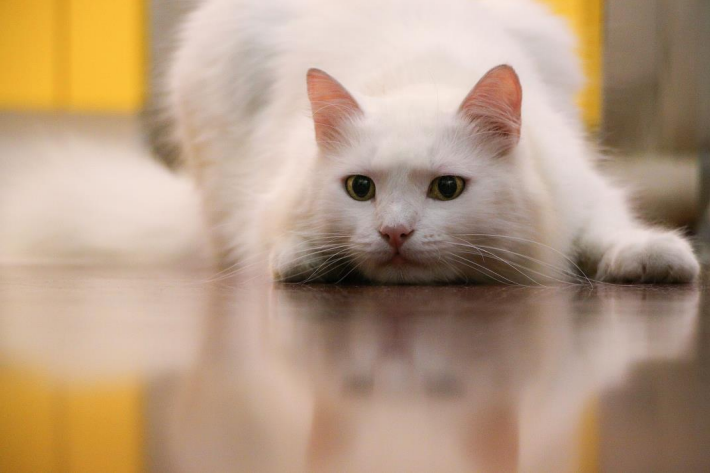
Cats are undeniably popular pets, finding homes in 30% of American and 37% of Canadian households. They’re cute and cuddly creatures whose unique personalities and funny antics have charmed us for centuries. And who doesn’t love watching cat videos on YouTube?
But despite their wide appeal, cats are sometimes the “misunderstood loners” of the pet world, plagued by stereotypes of selfishness and cruelty. They’ve gotten a big PR boost in recent years — for instance, we no longer believe that cats can steal a sleeping baby’s breath — but misconceptions remain.
Dispelling these myths can help improve human-feline relations, make our cats happier, and reduce the sad statistic of 3.2 million cats entering shelters in America every year. Read on to find out the truth about cats, and bust these unfair myths once and for all.
Myth #1: Your cat is glaring at you
We’ve all seen pictures like this one, and it’s fun to imagine that this cat really is ticked off about being dressed like a baby! But in truth, memes like this shouldn’t be taken too seriously. Unlike humans, cats tend to express their emotions through their bodies, not their faces — and the facial expressions they do make are very different from our own.
According to the Humane Society, half-closed eyes in a cat, without any other signs of anger, are actually a sign of contentment or relaxation. If your cat looks at you with narrowed eyes and blinks slowly, that’s kitty speak for “I love you!” On the other hand, a direct, wide-eyed stare is a tell for fear or anger. To spot an angry cat, look for an arched back, twitching tail and vocal signals such as growling or yowling. (And to learn more about cat body language, check this great guide from Purina.)
Myth #2: Cats are disobedient
True, cats are far less likely to listen to our orders than dogs, but it makes about as much sense to say that your dryer is disobedient because it won’t fold your laundry, even if you really wish it would. Why? Because cats’ brains are just not primed to understand commands the way dogs’ are.
Dogs are pack hunters. They evolved to work together with other dogs to take down prey, meaning group cohesion is necessary to their survival. And dogs have been bred by humans for millennia to work for us: by now, they have people-pleasing in their soul. Cats, on the other hand, are solitary hunters, who may form social relationships but don’t depend on them for survival. Researchers believe that rather than being bred by humans, they more or less domesticated themselves, and are genetically much closer to their ancestors than dogs are.
So it’s no surprise that cats don’t have obedience or doglike guilt in their natural behavior. As “a leopard cannot change his spots,” we can’t expect cats to be at our beck and call. They’re not defiant, it’s just how they are. While cats can be trained, and some cats can even learn elaborate tricks, it’s unreasonable to blame Whiskers for not being Lassie. Instead, learn what works to motivate your cat.
To induce a cat to act as you wish, it’s far more effective to use rewards than punishments. According to feline behavior specialist Sarah Ellis, cats have short attention spans and are unable to understand the connection between bad behavior and punishment, instead interpreting the punishment as arbitrary cruelty. This leads to frustration from owners who can’t see why their cat is acting out, and a self- perpetuating cycle of stress-induced misbehavior. Break the cycle by ignoring bad behavior, and rewarding the good with a treat.
Myth #3: Cats are cruel and sadistic to their prey
There are multiple reasons why cats might toy with their lunch before finishing it off, from sharpening their hunting skills to tiring out their prey before they strike. But “cruelty” and “sadism” are human moral concepts that don’t transfer to cats. Your cat doesn’t enjoy causing suffering, it’s just acting out the instincts that it’s gained over millions of years of evolution. After all, if cats didn’t like hunting as much as possible, they wouldn’t have survived very long in the wild!
To humans, though, it’s understandable that seeing Fluffy bat around a cute little mouse could be upsetting. If you don’t like to see your cat tormenting the local rodents, try putting a bell on her collar or even keeping her indoors. She may thank you for it, since traffic incidents in a cat’s first year of life make the average life expectancy three times as long for indoor cats as those who go outside.
Myth #4: Your cat doesn’t love you
As we learned above, dogs evolved with more help from humans than did cats, and they have come to understand us, expressing their love for us in obvious ways. Cats’ emotions can be harder to read than dogs’, which leads some dog people to conclude that cats are not social or affectionate. Even cat owners fall for this myth, sometimes saying things like “my cat is a jerk” or “my cat hates me!” But while they may express it differently from dogs, cats are social creatures, and the evidence shows they do love us.
Cats recognize their owners’ voices, show signs of distress when they’re gone, and prefer their company to that of strangers. While they don’t seek our help in solving problems the way dogs do, they do turn to us for reassurance about new and potentially scary situations. They’re happier to see us the longer we’ve been gone, and will even choose human interaction over food. They may not jump up and down and wag their tails, but rubbing, headbutting, kneading and licking are all outward signs of a loving and friendly cat.
So don’t look down on your cat for not being as exuberant as a dog. Instead, learn to recognize and reciprocate her unique feline form of showing love. Understand that they’re sensitive introverts who need their space, but that doesn’t mean they love you any less. (For more signs of feline affection, check out this list on Catster.)
The takeaway
Cats sometimes get a bad rap, but it’s only when we hold them to a human or canine standard of behavior, rather than learning to love them for the cute, spirited, agile, funny and loving creatures they are. Unwanted cat behaviors and aggression are often a result of stress, stress that can be caused by humans who don’t understand cats’ needs.
To improve your relationship with your feline friends, don’t compare them to other species. Instead, read up on cat body language and science-based tips for how to befriend a cat. And next time you hear someone spreading one of these myths, point them to this guide!